
Cuba's digital environment has grown measurably more repressive over the past year, according to Freedom House's newly released Freedom on the Net 2026 report. The island scored 19 out of 100 points, a two-point drop from 2025 that erases a modest prior gain and reaffirms its standing among the world's least free countries for internet users. Published Thursday under the title "Seismic Shifts on the Global Internet," the report covers developments between June 2025 and May 2026.
A Score Built on Three Failures
Freedom House's methodology breaks each country's total into three categories: obstacles to access, limits on content, and violations of user rights. Cuba managed just 5 of 25 possible points on access, 9 of 35 on content restrictions, and 5 of 40 on user rights. That final figure is especially telling: it suggests that even when Cubans manage to get online, they face serious risk simply for what they say or share. The cumulative score places Cuba just above Russia, and barely ahead of China, Iran, and Myanmar, the three lowest-ranked countries in the entire 38-nation survey.
Blackouts as Infrastructure Collapse
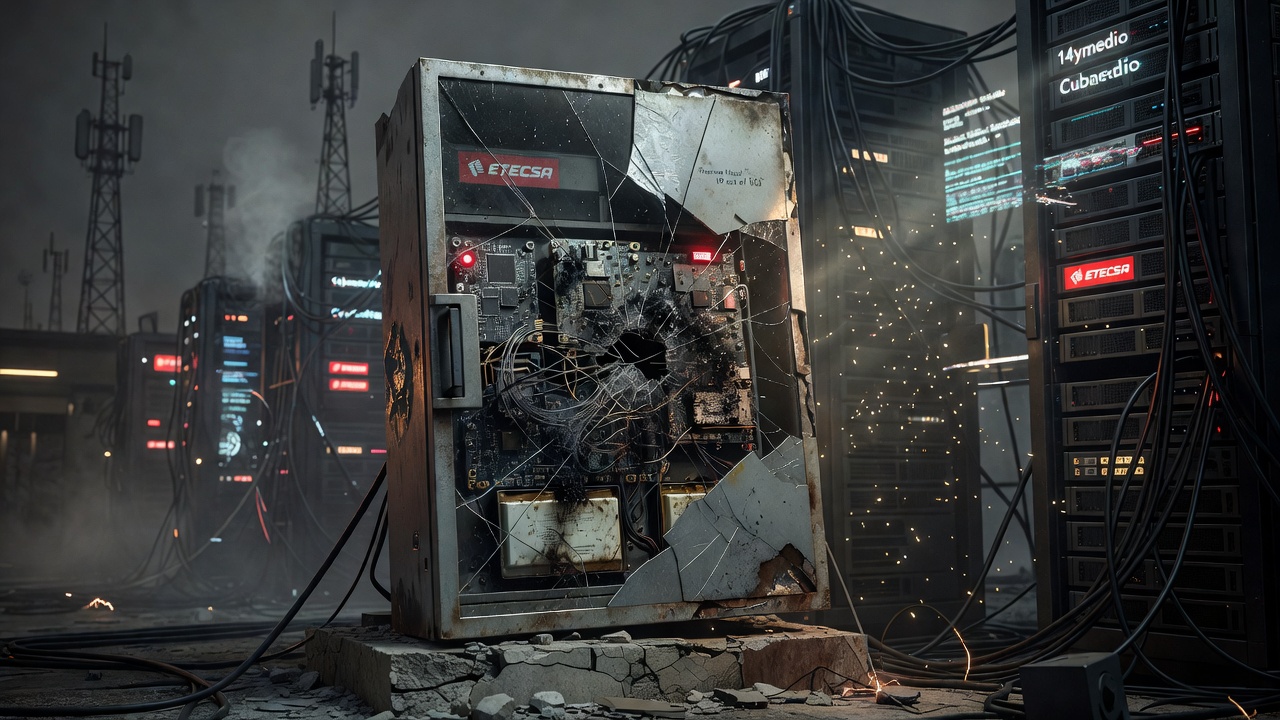
Much of Cuba's decline stems from an energy crisis that has crippled telecommunications infrastructure. Mobile network towers and switching equipment depend on backup batteries that last only a few hours once the power grid fails - and outages have become frequent and prolonged. Freedom House documents that nearly half of mobile radio bases and more than half of telecommunications cabinets have been knocked out of service during these events. One blackout in March 2026 triggered a 65 percent collapse in internet traffic, with full recovery taking roughly 29 hours. These are not abstract statistics; they represent sustained periods when ordinary Cubans had no reliable way to communicate, access independent news, or reach family abroad.
Compounding the infrastructure problem is affordability. In May 2025, state telecom monopoly ETECSA capped peso-based top-ups at 360 CUP monthly and pushed users toward data packages priced in foreign currency, raising the effective cost of mobile internet by roughly thirteenfold. For a population already navigating a severe economic crisis, this functions as a de facto rationing mechanism - those who cannot pay in dollars or euros find themselves increasingly cut off.
Prison Sentences for Posts
The report's most troubling findings concern direct state retaliation against online speech. Freedom House lowered Cuba's score on the ability to mobilize and campaign digitally after documenting cases in which individuals received multi-year prison sentences - including one of 14 years - for calling for protests on social media. Activist Alexander Verdecia was sentenced to seven years for social media posts, while a journalist received six years for protest-related activity, according to the Committee to Protect Journalists. In May 2026, Yasser García López was sentenced to five years over Facebook posts.
Freedom House also flagged that ETECSA "apparently facilitated" account hacking targeting activists, opposition figures, and independent journalists - a judgment the organization is careful to frame as its own assessment rather than a court finding. The mechanism described is plausible given ETECSA's monopoly control: a state-run carrier that manages SMS verification systems is positioned to intercept the authentication codes many platforms use for account recovery and login, effectively handing authorities a tool for surveillance and account seizure. A separate study by Prisoners Defenders, based on 200 testimonies and published in January 2026, found that 98.5 percent of participants reported reprisals tied to digital activity, with nearly half describing unauthorized access to their own accounts.
Part of a Wider Pattern
At least 23 independent Cuban news sites, including 14ymedio, CubaNet, Diario de Cuba, and El Toque, remain blocked from inside the country. This fits a global trajectory Freedom House describes as alarming: internet freedom has now declined for sixteen consecutive years worldwide, worsening in 16 of the 38 countries surveyed this year while improving in only eight. "Authoritarian regimes are redesigning the internet as a control system, deciding who can connect, what they can see, and whether they can be heard," said Kian Vesteinsson, the report's author and deputy director of research at Freedom House. He added that democracies "must invest in making censorship fail" rather than ceding the digital space to governments willing to disconnect their own citizens.