
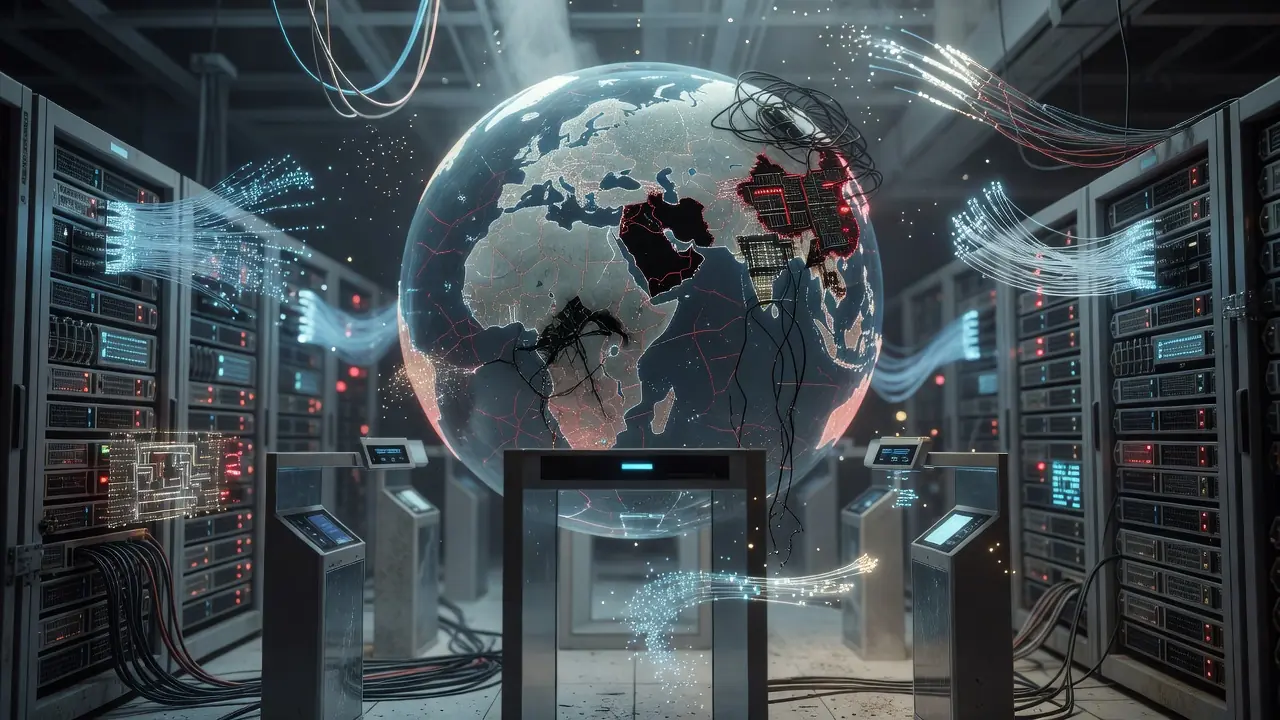
Governments are tightening their grip on digital life at a pace that shows no sign of slowing. Freedom House's newly released "Freedom on the Net 2026" report documents a sixteenth consecutive year of decline in global internet freedom, with Iran singled out as the country that deteriorated most sharply over the coverage period.
Iran's Collapse Into Digital Isolation
According to Freedom House, Iranian authorities responded to an antigovernment protest movement in January with brutal repression, then layered on extreme censorship measures after the United States and Israel struck the country in February. The result was the longest nationwide internet shutdown the organization has ever recorded in the history of the report - roughly 88 days during which ordinary Iranians were cut off from the global web. Freedom House also found that Iranian authorities have been restructuring the country's internet architecture so that only a select, privileged group retains access to global platforms, while the general population is pushed toward a closed, state-monitored alternative. This pattern - shutdown followed by permanent architectural segregation - illustrates how authoritarian governments are moving beyond temporary censorship toward durable technical control.
A Widening Global Pattern
Iran was not alone. Freedom House named China and Myanmar among the world's worst environments for internet freedom, continuing years of entrenched censorship and surveillance in both countries. Russia featured prominently as well: the report describes how President Vladimir Putin has consolidated control over internet service providers, allowing the state to maintain access to approved websites even while cutting off broader connectivity elsewhere in the country. Estonia, by contrast, was ranked the freest online environment, offering a reference point for what an open digital society still looks like. Among the countries scored, Armenia received 72 points out of 100, while the United States scored 73 - figures that place both nations in a middle tier, neither among the most repressive environments nor immune from the pressures reshaping internet governance everywhere.
Child Safety Laws and the Privacy Trade-Off
One of the report's more nuanced findings concerns age-verification requirements adopted in the name of protecting children online. Freedom House warned that these laws, however well-intentioned, create new avenues for collecting sensitive personal data, including facial scans and copies of identity documents - information that, once gathered, becomes a target for breaches, repurposing, or government access. Australia's under-16 social media ban, which began taking effect in December 2025, offers an early case study: by March 2026, roughly five million accounts had been deleted as platforms worked to comply. The episode highlights a recurring tension in digital policy - measures designed to shield vulnerable users can simultaneously expand the infrastructure of identity verification and surveillance, with consequences that extend well beyond the population they aim to protect.
AI, Disinformation, and the Risk of Overreach
The report also examined how governments are responding to AI-generated content. Freedom House found that policymakers have generally taken narrow, targeted approaches - addressing real problems such as impersonation and online harassment - but cautioned that some content-related misinformation laws risk being used as tools for overreach rather than genuine protection. Freedom House CEO Jamie Fly said agentic AI "promises to transform the internet," while warning that "authoritarian actors are already weaponizing AI." Deputy director for research Kian Vesteinsson framed the broader trend starkly, saying authoritarian regimes "are reengineering the internet into a system of control, deciding who can connect, what they can see, and whether they can be heard." Taken together, the findings suggest that the tools shaping tomorrow's internet - AI systems, identity verification, and infrastructure control - are being adopted unevenly, with real protective value in some hands and real repressive potential in others.