
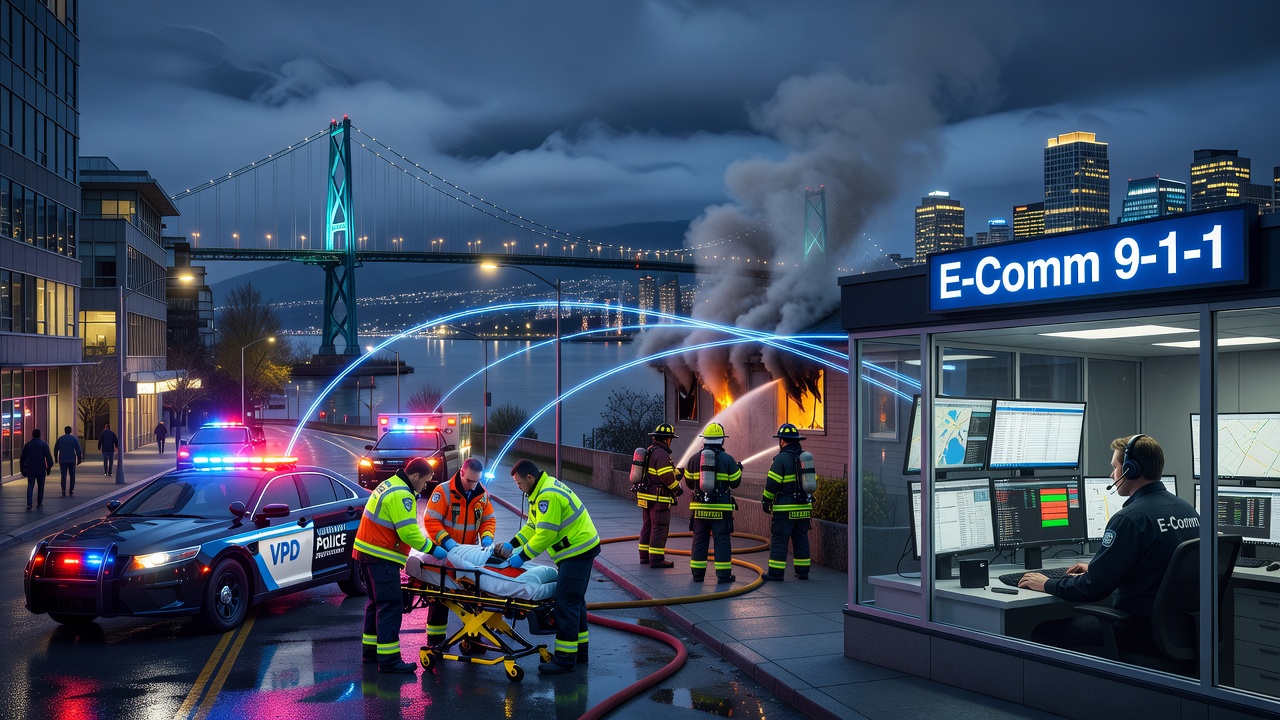
Knowing which number to dial can determine how quickly help arrives. The Vancouver Police Department, working with its contracted call-answer partner E-Comm 9-1-1, has laid out clear guidance distinguishing true emergencies from matters better suited to its non-emergency line, 604-717-3321, or online reporting. The distinction matters not just for individual outcomes but for the broader efficiency of emergency response systems that serve an entire city.
Why the Split Between Emergency and Non-Emergency Matters
Emergency call centres are built to prioritize speed. When 911 lines are tied up with reports that could have waited or been filed online, it slows response for situations where lives are genuinely at risk. The VPD's guidance is explicit: 911 is reserved for police, fire, or medical emergencies requiring immediate action, including crimes in progress. Everything else, from lost property under $25,000 to a noisy party or an assault reported after the fact, belongs on the non-emergency line or the department's online reporting tools.
This triage system reflects a model used by police services across North America. E-Comm call-takers assess each call and relay details to dispatch teams, who then direct the appropriate response. The system depends on public cooperation to function well; misdirected calls create bottlenecks that ripple outward.
Accessibility and Specialized Reporting Channels
One underappreciated element of the VPD's framework is Text with 9-1-1 (T911), a service allowing people who are deaf, deafened, hard-of-hearing, or speech-impaired to communicate with call centres through text messaging during emergencies. Notably, a text sent to 911 from an unregistered device, or without an accompanying voice call, will not go through. That technical limitation is significant: it means users relying on T911 need to register their phones in advance, something many may not realize until they need the service and it fails them.
The department has also highlighted broader accessibility efforts for Deaf, DeafBlind, and Hard-of-Hearing residents, signaling a recognition that emergency infrastructure has historically underserved these communities.
Specialized Situations Requiring Judgment Calls
Several categories demand particular care in deciding how to respond:
- Missing persons: there is no waiting period to report someone missing in British Columbia, but immediate safety concerns, especially involving children, seniors, or anyone at risk of suicide, require a 911 call.
- Intimate partner violence: abuse can be physical, sexual, emotional, psychological, verbal, or financial, and VPD Victim Services staff bring specialized training in crisis intervention for these cases.
- Mental health crises: immediate risk warrants 911, while non-urgent concerns are better directed to the BC Crisis Line or the national suicide prevention line.
- Fraud: victims who lost no money should contact the Canadian Anti-Fraud Centre, while losses over $10,000 within Vancouver city limits warrant a police report through the non-emergency line.
Property-related matters, from found bicycles to abandoned vehicles, parking violations, and graffiti, each have their own designated reporting paths, whether through the VPD's Property Office, the City of Vancouver, or ICBC for minor vehicle incidents without injuries.
A System Built on Public Literacy
None of this infrastructure works without public understanding. Crime Stoppers offers an anonymous channel for tips, separate from both emergency and non-emergency police lines, underscoring that reporting mechanisms are deliberately layered by urgency, anonymity, and subject matter. The VPD's cold case unit, still pursuing unsolved homicides dating to 1958, depends on this same public cooperation decades after the fact. Ultimately, the clearer the public's grasp of which door to knock on, the better equipped police and allied services are to allocate resources where they are needed most urgently.