
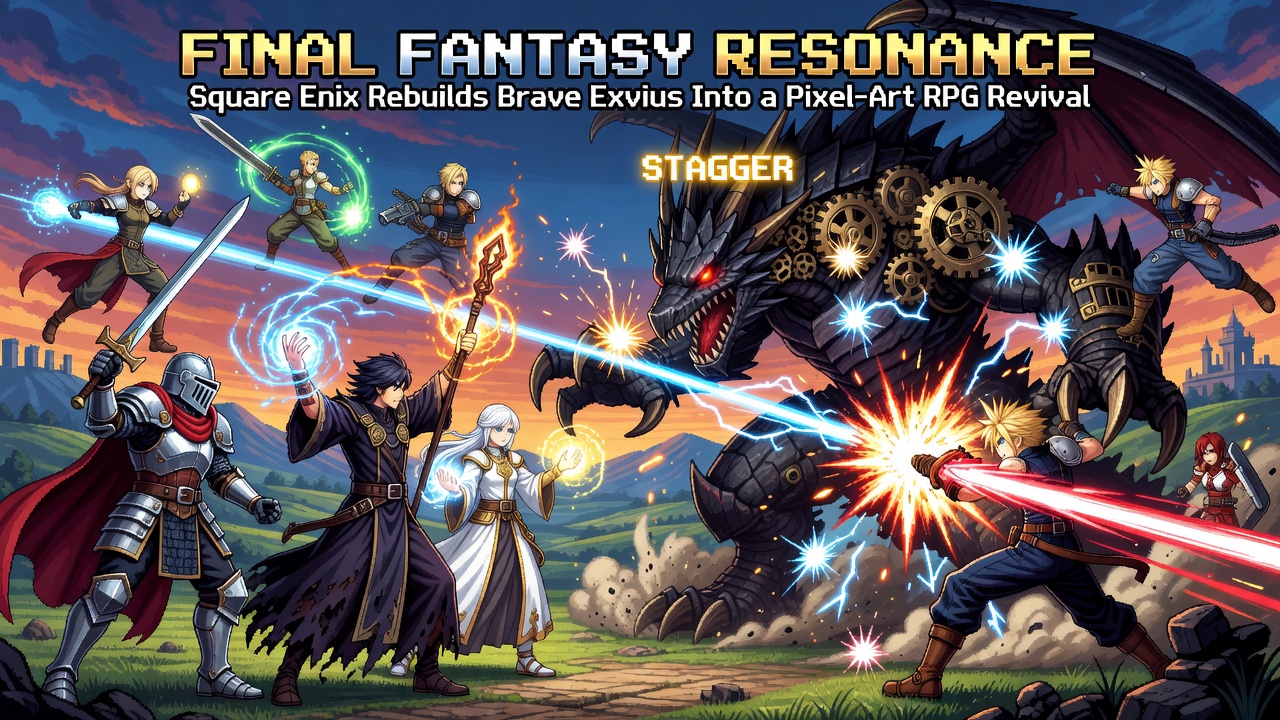
A mobile gacha title shuttered, and from its remains Square Enix has assembled something that reviewers at Gamescom 2026 are calling genuinely excellent. Final Fantasy Resonance, built on the technical and creative bones of the discontinued Final Fantasy Brave Exvius, reworks turn-based combat for a modern audience while keeping the HD-2D pixel aesthetic that made titles like Octopath Traveler stand out. It launches 22nd October on PC via Steam, PS5, Switch 2, and Xbox Series X/S.
From Mobile Gacha to Premium Console Release
The shift from a free-to-play mobile game to a premium, multiplatform release says something about where Square Enix sees value right now. Brave Exvius operated on the gacha model common to mobile RPGs: live-service monetisation, limited-time character pulls, and recurring engagement loops designed to keep players returning daily. Resonance abandons that structure entirely in favour of a traditional purchase model across consoles and PC. That's a meaningful business pivot. Gacha mechanics have drawn sustained scrutiny from regulators in several markets over their resemblance to gambling mechanics, particularly around randomised loot and spending by younger players. Moving away from that model removes Resonance from those conversations altogether, repositioning it as a straightforward premium RPG rather than a live-service product with monetisation pressure built into its design.
Designing Combat Around Two Eras of Final Fantasy
Director Hiroto Furuya and producer Keisuke Nakashima told Kotaku that the team's starting point was a deliberately simple question: what happens if you combine the job system from Final Fantasy 5 with the character-specific abilities of Final Fantasy 6? Both games are considered high points of the series' 16-bit era, and fusing their systems required what Nakashima described as genuine research and experimentation rather than simple nostalgia. The team then layered in the stagger mechanic familiar from the Final Fantasy 7 Remake trilogy and Final Fantasy 16 - a system where players must inflict stamina damage to interrupt enemy turns. That's a notably modern addition to a game otherwise rooted in 1990s design, and it's the kind of hybrid approach that explains why the combat reportedly feels both familiar and fresh to longtime fans.
The Near-Absence of 'Visions'
One of the more striking revelations from the Kotaku interview is that Resonance's "Visions" system - which lets players pair original characters with iconic figures from Final Fantasy's history, each bringing unique abilities into battle - was nearly cut from the game entirely. Furuya acknowledged the difficulty of reconciling the established worldview of legacy characters with Resonance's new setting. The team ultimately kept them, citing the appeal of recognisable spectacle, such as Cloud's signature Cross-Slash attack, delivered through elaborate CG sequences. It's a reminder that even well-received features in finished games often survive by a narrow margin during development, and that fan-service elements carry real design risk alongside their commercial appeal.
What This Means for the Series Going Forward
Resonance arrives as Square Enix continues experimenting with format across the Final Fantasy brand, from full 3D action in FF16 to spin-offs and remasters aimed squarely at longtime fans. A pixel-first, job-system RPG built from a cancelled mobile game's assets is an unusual path to a flagship-adjacent release, but it reflects a broader industry pattern: studios increasingly look to repurpose shelved or sunset projects rather than discard the work entirely. For players, the result is a game with clear mechanical ambition and an unusually frank account, from its own developers, of what nearly didn't make the cut.