
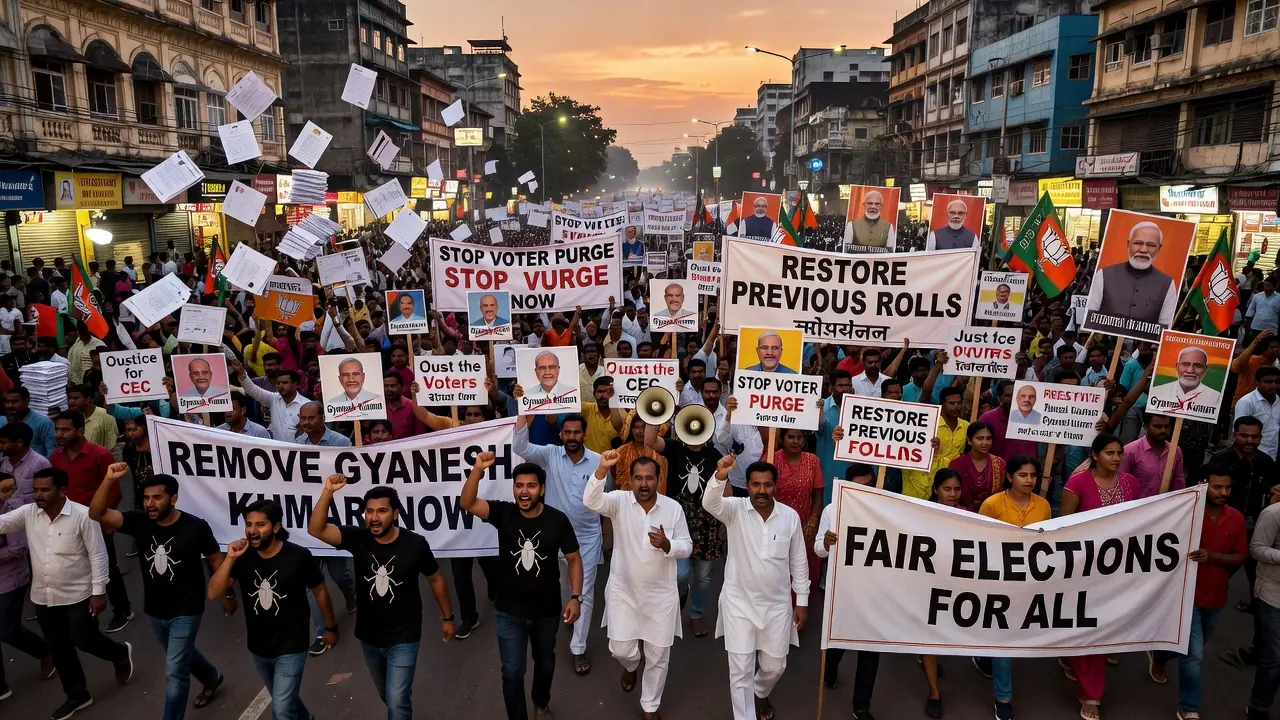
A nationwide revision of India's electoral rolls has triggered sustained street protests, with opposition parties and civil society groups calling for Chief Election Commissioner Gyanesh Kumar to step down. The unrest, which has gathered pace over the past week, centers on claims that the review process could strip millions of eligible citizens from voter lists ahead of a string of state elections next year.
What the revision actually changes
The Special Intensive Revision, or SIR, requires voters to submit documentation proving their continued eligibility to remain registered. The Election Commission frames this as routine housekeeping - removing duplicate entries, correcting errors, and keeping the rolls accurate in a country where voter registers number in the hundreds of millions. First rolled out in Bihar before local elections, the exercise has since extended to most states and union territories.
The friction lies in execution. Many voters, particularly in poorer or rural communities, lack the older government paperwork the process demands. Critics argue the documentation burden falls unevenly, and that an administrative exercise meant to clean up rolls could instead quietly remove legitimate voters who simply cannot produce the right paper trail in time.
Why the opposition sees political motive
India's Election Commission is constitutionally independent, but its neutrality is now under open challenge. Opposition parties allege the revision disproportionately affects voters more likely to back them, while leaving intact or expanding rolls favorable to Prime Minister Narendra Modi's Bharatiya Janata Party. The BJP rejects this, describing the exercise as necessary to remove ineligible "infiltrators" from the rolls - a framing that itself has become politically charged.
West Bengal's state election earlier this year hardened these suspicions. A rolls revision there removed roughly 9 million names, about 12% of the electorate, leaving eligible voters unable to cast ballots. The BJP won the state for the first time. Correlation is not proof of manipulation, but the episode gave the opposition a concrete example to point to, and it has shaped the national debate ever since.
Internal dissent adds to the pressure
Disagreement does not stop at the commission's door. Reporting from the Indian Express indicated that two of the three election commissioners formally objected to decisions on voter list revisions, registration procedures, and digital systems - objections that Kumar reportedly overruled. The commission has characterized this differently, describing the episode as "differing views and deliberations" rather than formal objections. Under Indian law, commission decisions require a majority vote, so internal splits of this kind are not merely procedural footnotes - they go to the legitimacy of the outcomes themselves.
What protesters are demanding
- Resignation or removal of Chief Election Commissioner Gyanesh Kumar, with an inquiry into his conduct
- A halt to the current revision and reversion to previous electoral rolls for upcoming elections
- A more transparent, independent process for appointing election commissioners
The "Cockroach" youth movement, which previously forced the resignation of India's education minister through sustained street pressure in July, has become a visible organizing force behind the current campaign. Election Commission data suggesting rolls in some regions could shrink by as much as 30% has sharpened the sense of urgency, particularly with several state elections scheduled early next year. How the commission responds - and whether it opens its internal deliberations to greater scrutiny - will likely determine whether this dispute cools or escalates further.