
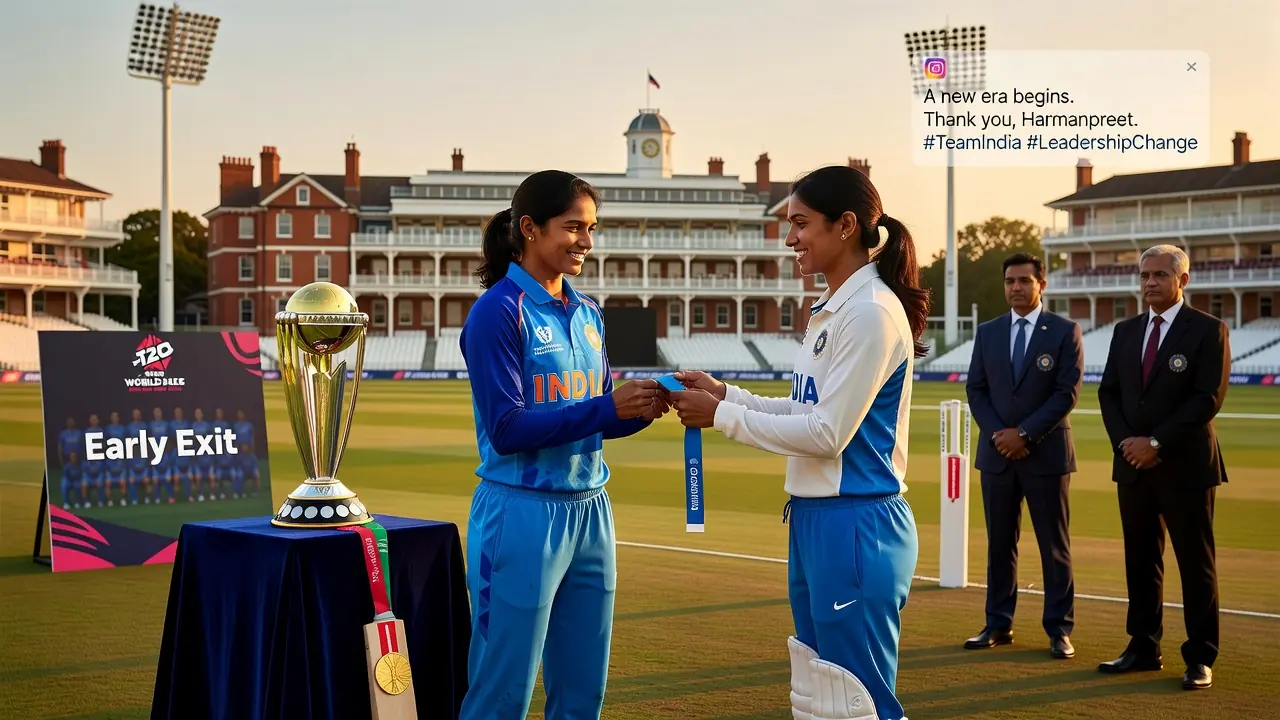
Harmanpreet Kaur has stepped away from the captaincy of India's women's cricket team across Tests, ODIs and T20 Internationals, closing a leadership stretch that began in 2012. Her decision follows a historic high - India's maiden 50-over World Cup title last year - and a recent low, an early exit from the group stage of this year's T20 World Cup. The timing, coming a day after talks with vice-captain Smriti Mandhana, head coach Amol Muzumdar and BCCI secretary Devajit Saikia, suggests a carefully managed transition rather than an abrupt departure.
A Captaincy Measured in Numbers and Moments
Harmanpreet's tenure spans five Tests, 51 ODIs and 155 T20Is, a workload that places her among the most experienced leaders in the women's game. Her final match in charge came on 22 September, when India retained their Asian Games title against Sri Lanka. In between, she guided the team to a Test win at Lord's in July and, most significantly, to the one-day World Cup triumph last year - a result that reshaped expectations for Indian women's cricket on the global stage. Her Instagram statement framed the exit not as a retreat but as a deliberate handover, describing a team left in "a good place" after years of personal sacrifice for collective progress.
Why Leadership Transitions Matter Beyond the Dressing Room
Captaincy changes in international cricket carry weight that extends past team selection. They affect sponsorship narratives, broadcast storylines and the commercial positioning of a sport that has grown rapidly in commercial value in recent seasons. Women's cricket in India has benefited from increased board investment, domestic league expansion and greater media visibility - all of which depend on stable, recognisable leadership to sustain fan engagement and advertiser confidence. A clean transition, rather than a forced or controversial one, tends to protect that commercial momentum.
The Succession Question
Smriti Mandhana, 30, is widely expected to take over as captain, having already served as vice-captain under Harmanpreet. The timing aligns with India's upcoming series against Zimbabwe - three T20Is and three ODIs starting 16 October - giving the new leadership group a lower-stakes opportunity to settle before facing stronger opposition. How the BCCI manages this handover, including whether Harmanpreet continues as a player under new captaincy, will shape perceptions of continuity within the squad heading into future global tournaments.
Performance Pressures Behind the Decision
India's early elimination from the most recent T20 World Cup, their second consecutive failure to reach the semi-finals in that format, adds context to the timing of Harmanpreet's exit. Leadership changes following underwhelming tournament performances are common across professional sport, reflecting boards' and players' recognition that fresh direction can reset momentum. Harmanpreet's own words - about placing team priorities above personal ambition and making decisions that were "not always understood" - point to the quieter tensions that often accompany long captaincy tenures, even successful ones.