
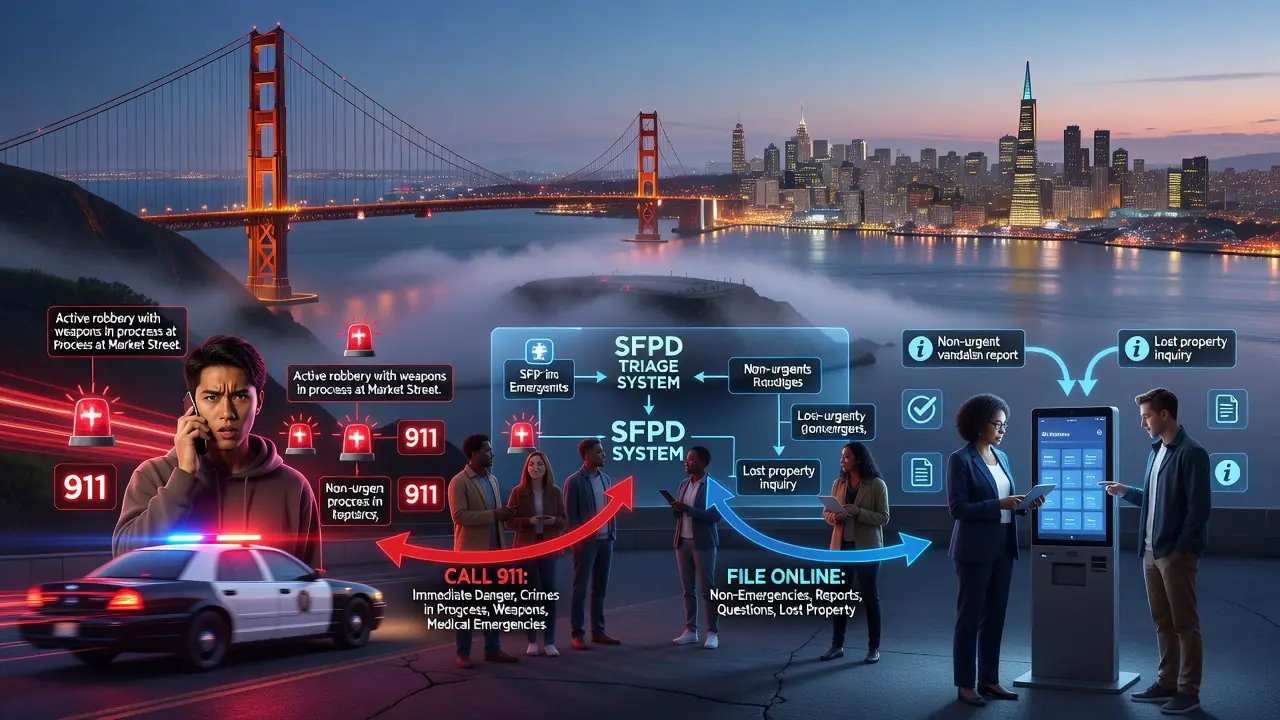
San Francisco residents now have a clearer map of when to dial emergency services, when to use the police non-emergency line, and when a crime can simply be reported through an online portal. The distinction matters: misrouted calls slow response times for genuine emergencies, while unnecessary station visits strain both residents and officers. The San Francisco Police Department's updated guidance is less about bureaucracy and more about directing limited resources to where they are actually needed.
Why the Triage System Exists
Emergency lines exist to handle situations involving immediate danger, weapons, or crimes still in progress. Every call to 911 that doesn't meet those criteria competes with one that does. That's the logic behind steering non-urgent matters - lost property, vandalism, vehicle break-ins, credit card fraud, mail theft - toward the non-emergency line or an online reporting system powered by CopLogic. The approach reflects a broader pattern among urban police departments: digitizing low-risk, high-volume report types frees up dispatchers and patrol officers for incidents that genuinely require a physical response.
What Can and Cannot Be Filed Online
The list of eligible online reports is specific, and SFPD is explicit that submissions outside those categories will be redirected rather than processed. Eligible categories include harassment by phone, graffiti, shoplifting, identity and cryptocurrency theft, phone scams, and theft that doesn't involve a residence, business, or items like firearms, passports, or vehicles.
- Cannot be filed online: residential burglaries, robberies, traffic collisions and hit-and-runs, stolen vehicles or license plates, lost or stolen foreign passports, and stolen e-bikes with serial numbers.
- These categories require an in-person report or a visit from an officer dispatched via the non-emergency line, since they often involve evidence collection or immediate investigative steps that an online form cannot capture.
Residents without internet access or who need assistance in a language other than those offered online can call 311, which provides support in more than 175 languages around the clock.
Jurisdiction Matters
SFPD only handles incidents within the City and County of San Francisco. Crimes occurring on BART property, the Golden Gate Bridge, freeways, or college and federal campuses such as the Presidio fall under separate law enforcement agencies - BART Police, the California Highway Patrol, or campus police departments, depending on location. Reporting to the wrong agency delays resolution, so knowing the correct jurisdiction before filing saves time for everyone involved.
The Legal Weight of a False Report
Every report, whether filed online or in person, is reviewed by an officer before it becomes official, and California law treats false reporting as a criminal offense. Under Penal Code Section 148.5, knowingly filing a false report - including misrepresenting a theft, inflating the value of stolen or damaged property, or using a false identity - is a misdemeanor punishable by fines and potential jail time. SFPD has stated it pursues prosecution of false reports, including ones submitted as "jokes," underscoring that the online system, despite its convenience, carries the same legal accountability as reporting in person.