
Sports betting has moved well beyond simply picking a winner. Markets such as over/under totals, handicap betting and both teams to score now dominate betting slips across football, basketball and other major sports, offering more nuanced ways to engage with a match. Understanding how these markets function is essential not just for strategy, but for grasping how bookmakers price risk and how bettors are exposed to it.
Totals Betting and the Logic Behind the Line
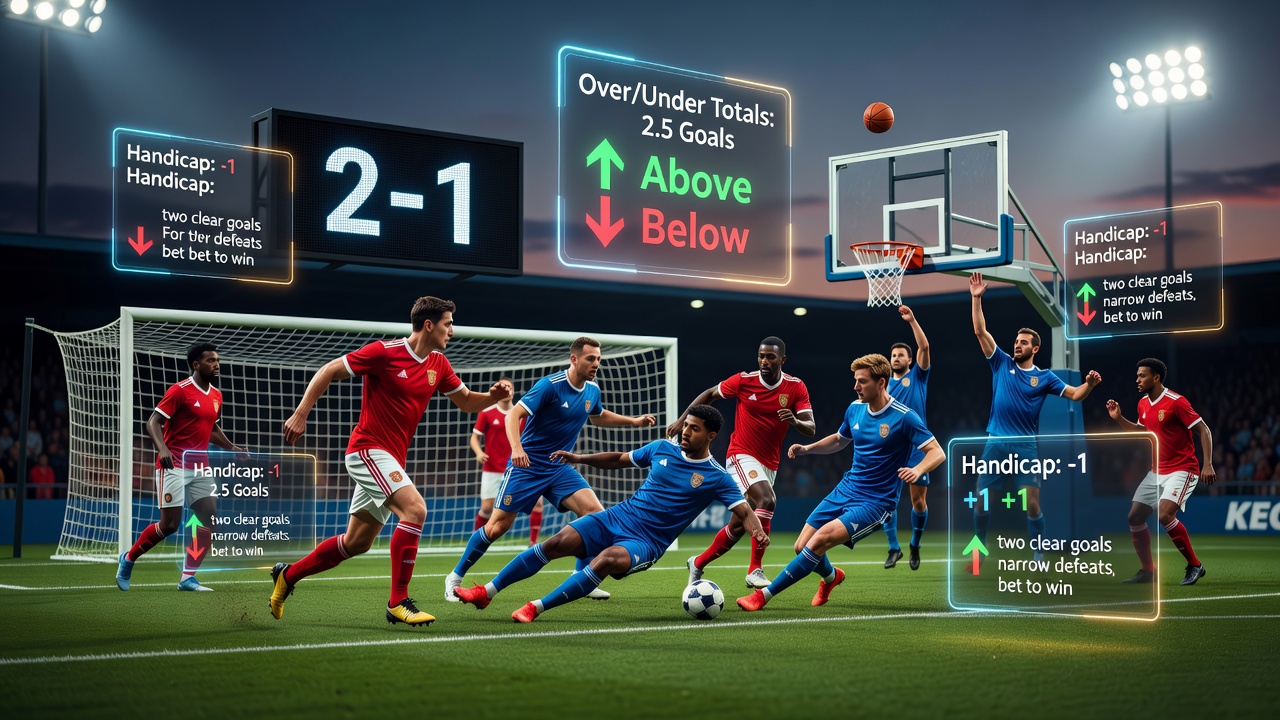
Over/under betting asks a simple question: will the combined output of both teams land above or below a number set by the operator. In football, a common line might be 2.5 goals, meaning three or more goals settles an "over" bet, while two or fewer settles an "under" bet. The half-goal figure exists specifically to eliminate the possibility of a tie, a structural detail that reflects how oddsmakers build markets to force a clear outcome.
This format is popular because it removes the need to back a specific team. It also means bettors are effectively wagering on the general tempo and defensive solidity of a fixture rather than its result, which is why statistical research into scoring patterns and recent form carries particular weight here.
Handicaps and Competitive Balance
Handicap betting exists to address mismatches between opponents. Rather than betting on a straight win, a bettor accepts an artificial adjustment to the scoreline. A -1 handicap on a stronger team means that team must win by two clear goals for the bet to succeed; a +1 handicap on the underdog allows that team to lose narrowly and still deliver a winning bet.
The appeal is twofold. It typically produces more competitive odds on heavily one-sided fixtures, and it forces a sharper assessment of how a match might actually unfold, not just who is favoured to win. This makes handicap markets popular in sports where quality gaps between teams are wide and straight win markets offer little value.
Both Teams to Score and Market Behaviour
The BTTS market is outcome-independent in a different sense: it does not matter who wins, only whether both sides find the net at least once. A 2-1 result settles the bet regardless of which team took the points, while a 0-0 draw or a one-sided shutout loses it. Its popularity tends to track leagues known for open, attacking football and less organised defensive structures, which is why historical scoring trends and head-to-head data are frequently cited by bettors assessing this market.
Research, Discipline and the Role of Technology
None of these markets reward guesswork. Team form, injuries, head-to-head history and tactical context all influence how totals, handicaps and BTTS markets should be read. Odds also vary between licensed operators, so comparing prices before placing a bet can affect long-term value.
- Bankroll management - setting a fixed budget and respecting it regardless of short-term results - remains a core element of responsible participation.
- Chasing losses by increasing stakes after a bad run is a recognised risk behaviour, not a strategy.
- Mobile betting apps have made in-play wagering more accessible, with live odds, notifications and statistics built into most platforms from licensed operators.
That accessibility cuts both ways. Faster, more convenient betting increases engagement, but it also raises the importance of built-in safeguards such as deposit limits and self-exclusion tools offered by regulated operators. No market structure - over/under, handicap or BTTS - changes the underlying fact that outcomes remain uncertain and odds are priced to favour the house over time.