
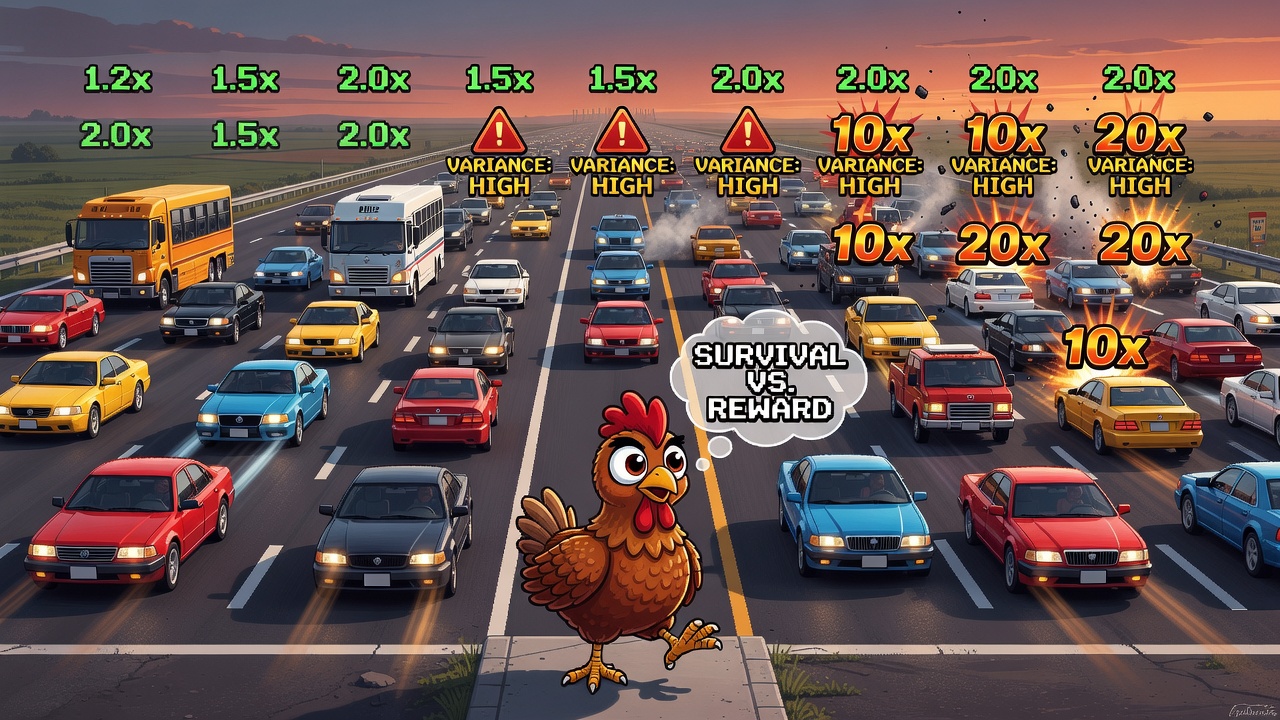
A chicken standing at the edge of eight lanes of traffic, weighing survival against reward, is one of the most enduring images in casual gaming. The premise sounds almost childish - get the bird across without becoming roadkill - yet this simple setup has been reworked into a genre of its own, spanning arcade throwbacks and modern betting-style titles alike. What keeps players coming back isn't nostalgia alone; it's the tension baked into every single step forward.
The chicken crossing road game format has evolved considerably from its pixelated origins. Modern versions add multipliers, cash-out mechanics, and risk curves that turn a simple hop into a calculated decision. Before committing real money or serious time to any version, it's worth checking a detailed chicken road game review to understand how outcomes are generated and whether the odds are transparent. That kind of groundwork separates players who understand what they're doing from those who are simply guessing.
This piece breaks down how the game actually works, what separates a well-designed version from a shallow clone, and which habits actually improve your results. No filler, no vague promises - just a practical look at mechanics, gameplay flow, and the decisions that matter most.
What Is the Chicken Crossing Road Game?
At its core, the chicken crossing road game asks players to guide a chicken across a series of lanes - sometimes literal traffic, sometimes stylized platforms - without getting hit or falling. The format traces back to arcade-style dodge games but has split into two distinct branches: casual entertainment apps built for quick sessions, and stake-based versions where each successful step increases a payout multiplier.
Origins and Popularity
The genre draws heavily from classic lane-dodging arcade games that rewarded timing and pattern recognition. Its simplicity made it easy to port across platforms, from browser games to mobile apps to betting sites. The visual metaphor - a chicken risking it all to cross a dangerous road - translates instinctively into a risk-reward framework, which is likely why it found a second life in wager-based formats.
Casual vs Betting-Style Versions
Casual versions focus on reflexes and pattern memorization, often with lives, power-ups, and level progression. Betting-style versions strip away lives entirely and replace them with a single continuous run: each lane crossed raises the stakes, and the player decides when to stop. The mechanics look similar on the surface, but the psychological experience is completely different - one is about skill mastery, the other about risk management.
Who Plays It and Why
The appeal spans two very different audiences. Casual players enjoy the short, repeatable sessions and low barrier to entry. Risk-oriented players are drawn to the escalating tension of betting formats, where every additional step forward is both an opportunity and a gamble. Both groups respond to the same core hook: visible, immediate consequences for every decision.
Chicken Road Game Gameplay Explained
Understanding chicken road game gameplay starts with recognizing that it's built on a single repeated decision, dressed up in different visual themes. Every round follows the same basic rhythm: assess the lane, commit or hold back, then face the outcome instantly.
Core Objective and Win Conditions
The stated goal is straightforward - cross as many lanes as possible without collision or failure. In stake-based versions, the actual objective shifts subtly: the goal becomes optimizing when to stop rather than how far you can theoretically go. Going the furthest doesn't guarantee the best outcome if you get caught by a bad step right before cashing out.
Movement and Timing Systems
Movement is typically step-based rather than continuous, meaning each advance is a discrete action rather than fluid motion. This design choice matters because it turns the game into a series of individual bets rather than one continuous skill test. Timing still plays a role in visual/reflex versions, but in probability-driven formats, timing is replaced entirely by decision-making under uncertainty.
Session Flow From Start to Finish
A typical session begins with a stake or entry decision, followed by a sequence of forward moves, each one displaying updated risk and reward. Players can usually see the current multiplier or progress indicator before deciding whether to continue. The session ends either by voluntary cash-out, a failed crossing, or reaching a maximum threshold set by the game.
Chicken Road Game Mechanics Breakdown
The mechanics underneath the surface determine whether a version feels fair, exciting, or frustrating. Chicken road game mechanics generally rely on randomized outcome generation paired with a visible progression system that communicates risk to the player in real time.
Randomization and Probability Design
Each lane crossing carries an independent probability of success, and this probability typically decreases - or the reward increases - as the player advances further. This creates a curve where early steps are relatively safe and later steps carry disproportionate risk. Understanding this curve is more valuable than trying to spot patterns, since well-built versions use randomized outcomes that don't follow exploitable sequences.
Multiplier and Reward Scaling
In stake-based formats, the multiplier attached to each successful step grows according to a predefined curve. Early multipliers might increase modestly, while later stages can spike sharply to reflect the rising danger. This scaling is intentional - it's what creates the temptation to keep pushing forward even after a comfortable profit has already been secured.
Difficulty Curves and Obstacle Patterns
- Early lanes usually have lower failure rates to build player confidence
- Mid-game lanes introduce more variance to test commitment
- Late-game lanes carry the highest risk paired with the highest reward multipliers
- Some versions include visual cues or warnings before especially risky lanes
Fairness and Outcome Verification
Reputable versions of the game use verifiable random number generation, often with published return-to-player figures or provably fair systems that let players confirm outcomes weren't manipulated after the fact. This is one of the biggest differentiators between trustworthy platforms and low-effort clones that obscure how results are actually determined.
Chicken Road Game Review: Strengths and Weaknesses
A fair chicken road game review has to weigh both the entertainment value and the underlying fairness of the system. The format has genuine strengths, but it also has design choices that can work against players who don't understand them.
What the Game Does Well
The pacing is tight - rounds are short enough to avoid fatigue but long enough to build real tension. The visual feedback loop, where every step immediately shows a result, keeps engagement high without requiring complex rules. It's also accessible: no deep strategy guide is needed to understand the basic premise within seconds of watching a round play out.
Common Criticisms and Limitations
The most common criticism is that the escalating risk curve can push players into decisions driven by emotion rather than logic. Because each step feels like a small, low-stakes choice, it's easy to lose track of accumulated risk. Some versions also lack transparency about their underlying probability model, which makes it harder for players to make informed decisions about when to stop.
Comparing Different Versions of the Game
Casual mobile versions tend to prioritize charm and replayability, often adding cosmetic upgrades or level themes. Betting-style versions prioritize the mathematical relationship between risk and reward, with less emphasis on visual variety and more on the mechanics of the multiplier system. Neither approach is objectively better - they simply serve different player motivations.
Chicken Road Game Tips for Better Results
Improving your results in this format isn't about finding a hidden trick - it's about managing decisions consistently instead of reacting emotionally to each round. The following chicken road game tips focus on discipline rather than shortcuts, since no legitimate version of the game can be reliably "beaten" through pattern recognition alone.
Bankroll and Risk Management
Set a fixed amount you're willing to commit per session and treat it as a hard limit, not a suggestion. Avoid increasing your stake after a loss in an attempt to recover it quickly - this is one of the fastest ways to turn a manageable session into a costly one. Track your results over multiple sessions rather than judging your approach based on a single run.
Reading the Risk Curve Effectively
Pay attention to how quickly the multiplier accelerates relative to the failure probability at each stage. Early cash-outs won't maximize theoretical reward, but they dramatically reduce variance, which matters more for players prioritizing consistency over occasional large wins. Recognizing the point where risk begins to outpace reward is more valuable than chasing the highest possible multiplier every round.
Avoiding Common Player Mistakes
- Continuing past a planned stop point because of a winning streak
- Ignoring the posted probability or return information for the specific version being played
- Treating short-term results as evidence of a pattern in a randomized system
- Playing extended sessions without breaks, which reduces decision quality
Choosing the Right Version to Play
Not all versions are built with the same level of transparency or fairness. Prioritize platforms that clearly display odds, use verifiable randomization, and publish their reward structure rather than obscuring it behind vague marketing. A version that hides its mechanics is a version that's harder to play intelligently, regardless of how polished its interface looks.
Frequently Asked Questions
Is the chicken crossing road game based on skill or luck?
Casual arcade versions reward reflexes and timing, making skill genuinely relevant. Betting-style versions are driven primarily by randomized probability, meaning skill plays a much smaller role than decision discipline and risk management.
Can I predict which lane will be safe?
No. Legitimate versions use independent random outcomes for each step, so previous results have no bearing on future ones. Any pattern you think you notice is coincidental rather than exploitable.
What's the difference between free and real-money versions?
Free versions typically use the same underlying mechanics but without financial stakes, making them useful for understanding the risk curve before committing money. Real-money versions add actual consequences to each decision, which changes the psychological experience significantly even if the math stays identical.
How do I know if a version is fair?
Look for published return-to-player percentages, provably fair verification systems, or licensing information from a recognized regulator. Platforms that hide this information or make it difficult to find are a warning sign worth taking seriously.
Is there an optimal point to stop and cash out?
There's no universally correct stopping point, since it depends on your personal risk tolerance and session goals. A practical approach is deciding your target multiplier before you start playing, rather than making that decision mid-session when emotions are more likely to influence your judgment.
Why do losses feel more frequent in later stages of a round?
This is by design - the probability of failure typically increases as the multiplier grows, which is what makes later lanes feel riskier. It's not a sign of manipulation; it's simply the reward curve reflecting higher stakes for higher potential payouts.