
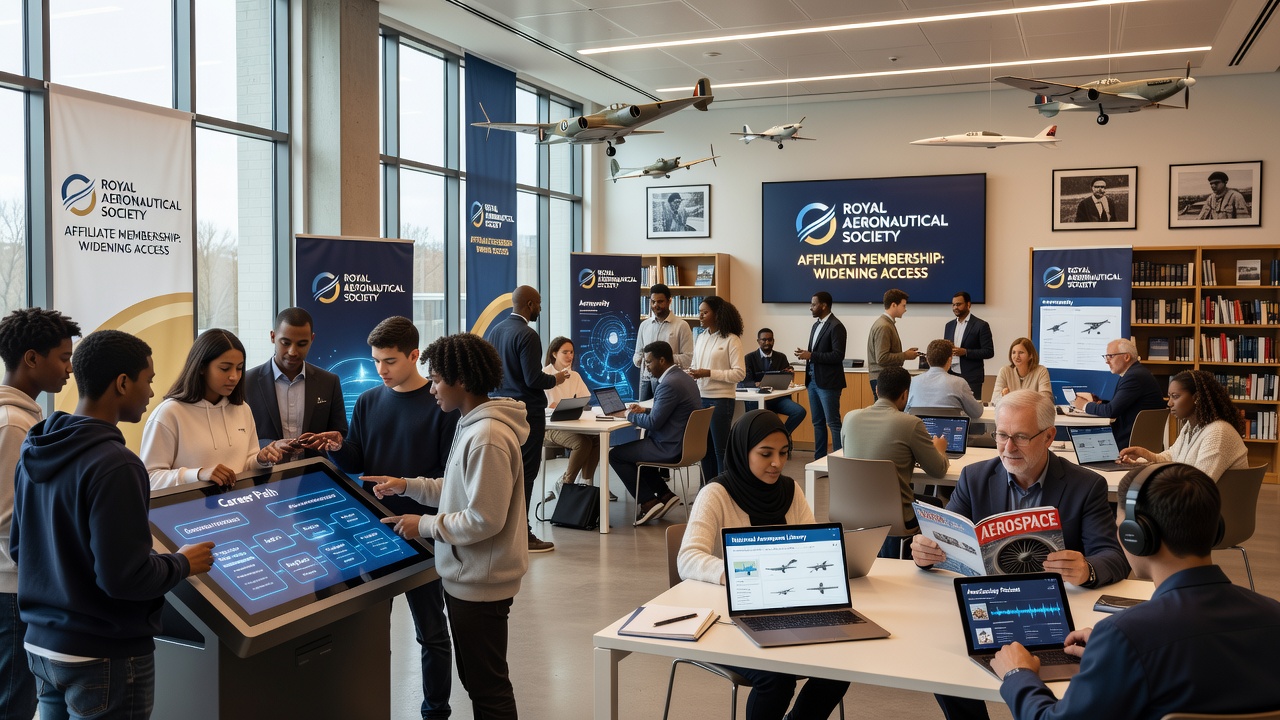
Professional bodies in engineering and aviation have historically drawn sharp lines around who qualifies for membership. The Royal Aeronautical Society is taking a broader approach with its Affiliate category, opening its doors to anyone with a genuine interest in aeronautics or aerospace, regardless of professional background or qualification level. This shift reflects a wider pattern across technical institutions: recognising that curiosity and engagement matter alongside formal credentials.
What Affiliate Membership Actually Provides
The offering is substantial for a category with no formal entry requirements. Members gain access to Aeroversity, the Society's learning management system, which supports digital and blended CPD experiences. There is also a subscription to AEROSPACE magazine, delivered monthly alongside twice-weekly insight blogs through a dedicated member app. For those wanting deeper research access, the National Aerospace Library catalogue and e-books are included, alongside online resources such as the AeroSociety Podcast and free access to the Aeronautical Journal.
Beyond digital content, the Society organises over 400 lectures and events globally each year, many run through local branches. This gives affiliates a route into professional networks that would otherwise require years of industry positioning to access.
Why Broader Access Matters for the Sector
Aerospace and aviation face a well-documented skills gap, and professional bodies play a quiet but significant role in addressing it. By lowering the barrier to entry, the Society positions itself as an on-ramp for students, career-changers, enthusiasts and early-career professionals who may not yet meet the criteria for full Member or Fellow status. The inclusion of Career Path, an AI-powered careers tool, and structured support toward professional registrations such as EngTech, IEng and CEng, suggests the Affiliate tier is designed as a genuine pipeline rather than a passive subscription.
This matters commercially too. Professional institutions depend on membership revenue and engagement to fund research, advocacy and standards work. Widening the funnel through an accessible entry tier is a sustainable way to grow relevance without diluting the credibility of higher membership grades, which still require demonstrated competence and experience.
The Practical Route In
Applications are handled online through a member profile system. First-time users must create a website account before submitting an application, and confirmation follows once the Society processes the request. The Society's Careers team also provides guidance and information specific to aerospace and aviation employment, adding a practical layer beyond the membership benefits themselves.
With more than 60 volunteer-led branches and divisions operating internationally, the Society's structure depends on sustained grassroots participation. Affiliate membership, by design, feeds that structure, giving newcomers a stake in a global professional community built around shared technical interest rather than gatekept credentials.