
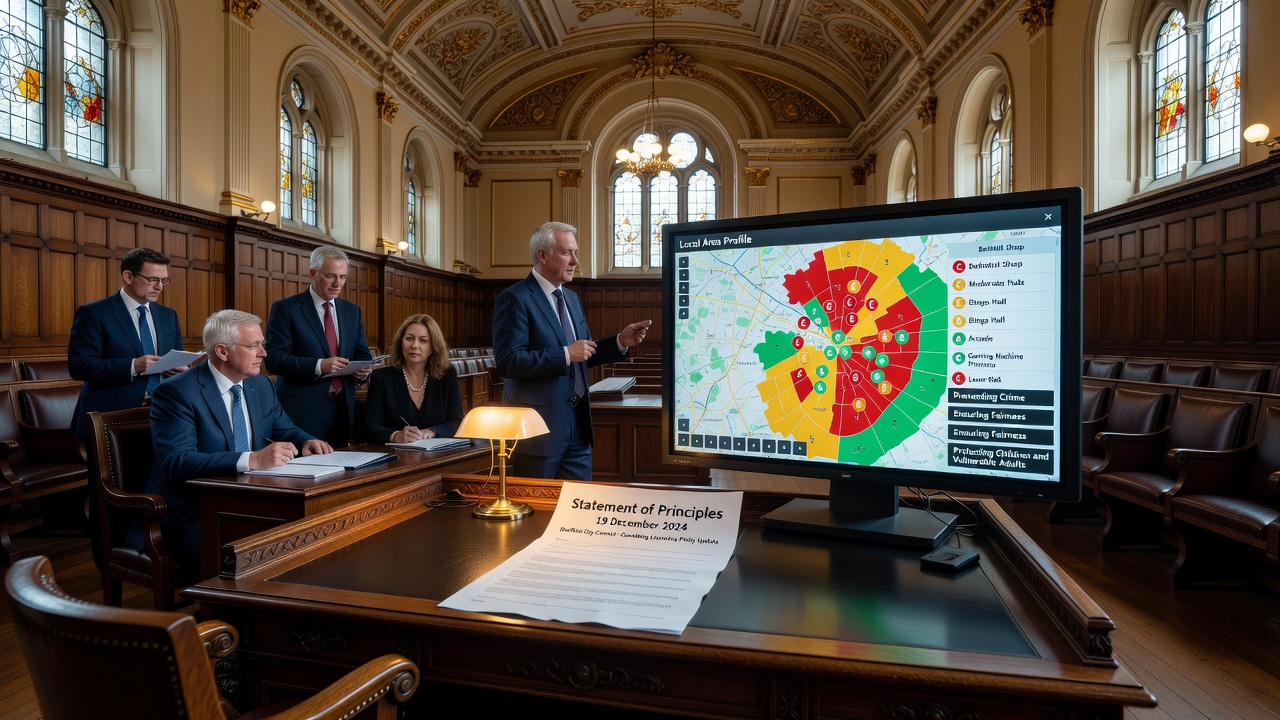
A revised Statement of Principles under the Gambling Act 2005 takes effect in Sheffield on 17 January 2025, replacing every previous version of the local authority's gambling policy. The document, published on 19 December 2024, sets out how the council will assess applications from betting shops, casinos, bingo halls, arcades and licensed premises seeking gaming machines. For operators and residents alike, it is the practical rulebook behind a national law that has governed commercial gambling in Britain for nearly two decades.
Why local policy matters alongside national law
The Gambling Act 2005 created a two-tier system. The Gambling Commission, an independent regulator, issues operating licences to gambling businesses and personal licences to individuals working within them. It covers casinos, bingo, betting, gaming machines, pool betting and larger charity lotteries, whether delivered on premises or remotely through the internet and mobile devices. It does not regulate the National Lottery or spread betting, which sit under separate frameworks.
Holding a Commission licence is only half the requirement. Any operator wanting physical premises - a betting shop, an adult gaming centre, a bingo club, a track offering on-course betting - must also secure a premises licence from the relevant local licensing authority. That authority, in Sheffield's case, must publish and periodically revise a Statement of Principles explaining how it will exercise that power. Both regulator and council are bound by the same three licensing objectives: preventing gambling from becoming a vehicle for crime, ensuring gambling is conducted fairly and openly, and protecting children and vulnerable people from harm.
The Local Area Profile: mapping risk before applications land
Sheffield has paired its Statement of Principles with a Local Area Profile, an interactive, geographically based tool that flags where local conditions might affect one or more of the licensing objectives. It is not a statutory requirement - many authorities operate without one - but it serves several practical functions:
- Helping applicants build risk assessments grounded in genuine local conditions rather than generic templates
- Giving responsible authorities and interested parties a shared evidence base when scrutinising applications
- Supporting more consistent, defensible decisions where risk factors are contested
- Encouraging earlier, more constructive dialogue between the council and prospective licensees
Applicants are expected to address the specific risks the profile identifies in their own submissions, and to carry out independent research into the areas where they intend to operate. The council has confirmed it will refer to the latest version of the profile whenever it considers a new application, meaning outdated risk assessments could weaken a case even if the underlying premises have not changed.
Fees, permits and the wider compliance picture
Licensing authorities have discretion to set their own premises licence fees, within maximum limits fixed by central government. Fees must accompany each application - an omission invalidates the submission - and are non-refundable regardless of outcome. A first annual fee falls due within 30 days of a licence being issued. Beyond premises licences, the council also handles permits for gaming machines in clubs and licensed premises, prize gaming, unlicensed family entertainment centres, Temporary Use Notices and Provisional Statements.
Safeguarding remains a recurring thread through the policy. Operators are directed toward safeguarding awareness training designed to help staff recognise and report signs that a child or vulnerable person may be at risk within a gambling environment. This reflects a broader regulatory trend: licensing decisions increasingly weigh not just financial and operational competence but an operator's capacity to identify harm before it escalates.
What this means in practice
For operators, the message is procedural discipline - align applications with both the national licensing objectives and the specific local evidence the council has assembled. For residents and interested parties, the Local Area Profile offers a rare degree of transparency into how gambling premises decisions are actually made. Copies of the full Statement of Principles remain available for inspection by appointment at the council's licensing office, alongside the published fee schedule and guidance for anyone seeking clarification before submitting an application.