
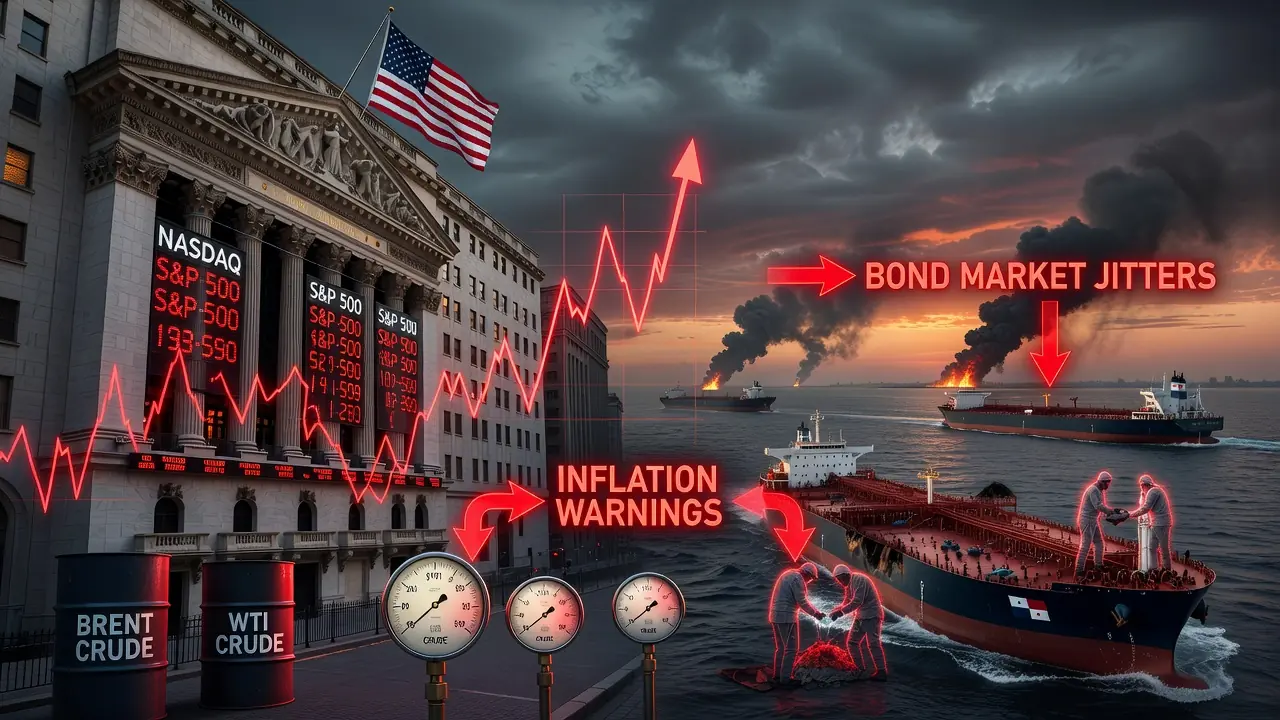
A market that celebrated record highs on Tuesday reversed course a day later, as Treasury yields climbed to levels unseen in more than two decades and oil prices swung sharply on fears of disruption in the Middle East. The Nasdaq and S&P 500 had both closed at all-time peaks earlier in the week, but the combination of rising borrowing costs and energy-price instability was enough to pull stocks lower on Wednesday. The episode underscores how fragile investor confidence remains even amid strong equity performance.
Why bond yields are rattling stocks
Treasury yields moving to their highest point in more than 20 years is not a minor technical detail - it changes the economic calculus for nearly every asset class. Higher yields mean the government is paying more to borrow, which in turn pushes up costs for mortgages, corporate debt and consumer credit. For equity investors, rising yields also make bonds a more attractive alternative to stocks, particularly richly valued technology shares that depend on future earnings growth. When yields spike quickly, as they have done this week, markets tend to reprice risk across the board, which explains why a session of record highs was followed almost immediately by a broad pullback.
Oil's role in the inflation equation
The renewed volatility in crude prices adds another layer of concern. Brent crude pushing above $101 a barrel and WTI trading near $89 are levels that feed directly into inflation expectations, since energy costs ripple through transportation, manufacturing and heating bills. Investors worry that sustained high oil prices could force central banks to keep interest rates elevated for longer, reinforcing the very bond-market pressure that is already unsettling equities. This is the mechanism connecting a geopolitical flashpoint in the Strait of Hormuz to portfolio decisions made far from the Gulf.
Supply tensions in the Strait of Hormuz
The immediate trigger for this week's oil price swings has been a documented rise in attacks on shipping in the Gulf and the Strait of Hormuz, one of the world's most critical energy corridors. UK Maritime Trade Operations reported nine attacks on tankers in the strait so far this month - already half of September's combined total for the strait and the Gulf. The injury of 12 crew members aboard a Panama-flagged tanker this week, confirmed by India's Ministry of External Affairs, illustrates that these are not abstract risks but incidents with direct human and commercial consequences.
Washington has sought to reassure markets. Secretary of State Marco Rubio reiterated that the United States considers the strait under control and that oil flows remain close to normal. Data from maritime intelligence firm Kpler lends some support to that view: Gulf oil flows excluding Iran recovered to more than 81 percent of pre-war levels in September, and total Middle East crude exports actually exceeded pre-war levels on 14 days that month. Yet this recovery has come alongside rising costs - shipping companies are absorbing higher freight, insurance and security expenses as they route tankers through contested waters.
Coordinated response from energy authorities
Governments and international bodies have moved to contain the fallout. The International Energy Agency said its member countries stand ready to release additional reserves if conditions deteriorate further, with diesel prioritised given tighter supplies of that fuel. This follows a G7 agreement, coordinated with the IEA, to release 100 million barrels of diesel and crude from strategic reserves - a direct response to energy-supply concerns stemming from the US-Iran conflict. These interventions appear to have had a calming effect, with oil prices retreating somewhat after the IEA's latest statement, even though the underlying security situation in the strait remains unresolved.
For investors, the coming weeks will likely hinge on whether shipping disruptions escalate further or whether diplomatic and reserve-release measures succeed in stabilising energy markets. Either outcome will have consequences well beyond oil traders, shaping the path of bond yields, borrowing costs and the valuations underpinning this year's record-setting stock rally.