
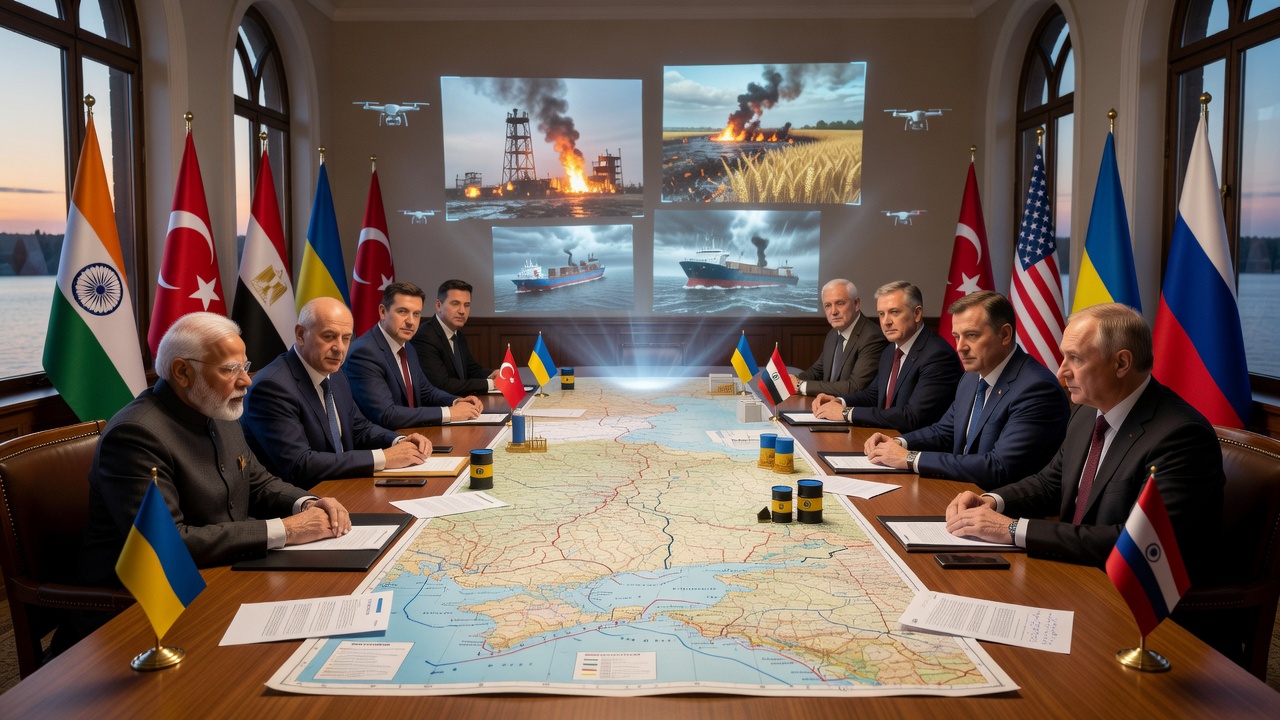
Ukraine has confirmed it is weighing four separate mediation offers from India, Turkiye, Egypt and the United States, each aimed not at ending the war outright but at halting strikes on energy infrastructure, ports and Black Sea shipping. Foreign Minister Andrii Sybiha disclosed the proposals at a Kyiv briefing, calling India's plan "the most comprehensive" and noting that New Delhi has signalled willingness to take on a mediating role for the first time since the war began in February 2022.
What Each Proposal Actually Covers
None of the four plans seeks a comprehensive peace. Instead, they target overlapping but distinct slices of the conflict. India's proposal, as reported by Indian media citing unnamed sources, reportedly combines three elements: a mutual halt to strikes on energy facilities, protection of grain and energy flows through Black Sea ports, and safeguards for commercial shipping and crews. That last point carries particular weight for New Delhi, given that Indian sailors have been killed on Black Sea routes in recent months.
Turkiye and Egypt's offers appear narrower, focused chiefly on restoring safe passage for grain shipments, building on the 2022 Black Sea Grain Initiative that Ankara and the United Nations brokered before Russia withdrew from it in 2023. The US proposal, according to President Volodymyr Zelenskyy, involves three steps: a mutual energy-strike freeze, reopening the grain corridor, and a trilateral meeting between Washington, Kyiv and Moscow, tentatively discussed for Abu Dhabi.
Why Grain and Energy Have Become Diplomatic Flashpoints
The stakes extend well beyond the battlefield. Russia and Ukraine together account for a significant share of global wheat shipments, and renewed attacks on port infrastructure pushed wheat futures to a multi-year high in August. Egypt's interest is direct: the country depends on Ukrainian grain for roughly a third of its supply.
Energy markets are equally exposed. Ukraine says it has conducted more than 190 drone strikes on Russian refineries this year, reportedly hitting all of the country's largest facilities, with estimates suggesting a substantial drop in Russian fuel output. Combined with reduced Middle East supply tied to the US-Israel conflict with Iran, global diesel markets have become unusually sensitive to disruptions in Russian output - a dynamic analysts say is driving renewed international appetite for even a partial truce.
Moscow's Response Remains Ambiguous
Russian officials have offered polite but noncommittal language. Kremlin spokesperson Dmitry Peskov said Russia would welcome India's efforts, and President Vladimir Putin praised Prime Minister Narendra Modi's "very good ideas" without elaborating. Privately, however, a Ukrainian official told the Kyiv Independent that Russia has rejected India's plan, and Ukraine's agriculture minister said Moscow has turned down every Black Sea ceasefire option presented so far.
Analysts argue this pattern reflects strategy rather than indecision. Russia's territorial demands - covering Donetsk, Luhansk, Kherson and Zaporizhia in full, plus a buffer zone in northern Ukraine - have not softened since the invasion began and have at times expanded. Moscow is also seeking sanctions relief and military concessions tied to any Black Sea arrangement, conditions that make a narrow truce difficult to isolate from the broader conflict.
Why Previous Attempts Have Collapsed
The war's history is littered with failed diplomatic openings. A US-brokered 30-day energy truce in early 2025 broke down amid mutual accusations of violations. Istanbul talks the same year stalled when Russia sent a delegation without authority to sign anything binding. An August 2025 summit between Trump and Putin in Alaska produced no agreement despite earlier optimism from Washington.
Policy analysts suggest the underlying obstacle is not a shortage of mediators but a lack of economic pressure strong enough to alter Moscow's calculations. Some point to Europe's unfinished effort to shut down Russia's shadow fleet of oil tankers as one meaningful lever; others argue China's purchasing decisions on Russian oil would matter more than any diplomatic initiative, though there is little sign Beijing intends to shift course. Without such a shock, the consensus among observers is that the war is more likely to stretch into further years than resolve in the coming months.