
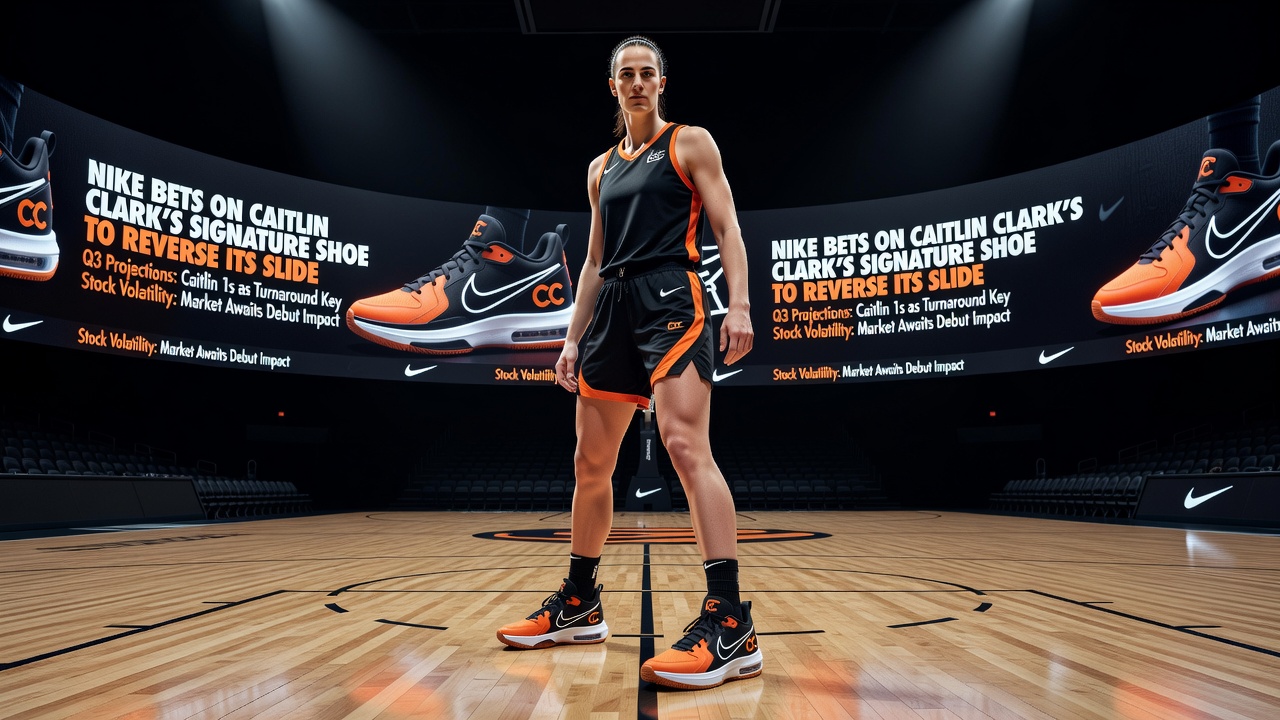
Nike released the Caitlin 1s on Tuesday at 10 a.m. Eastern, the first signature shoe built around WNBA star Caitlin Clark, arriving on the same day the company reports quarterly earnings after the close. The timing is not coincidental. With revenue and earnings both expected to decline for the period, Nike needs a storyline investors can rally around, and executives are clearly hoping Clark's sneaker can provide one.
A Shoe Launch Carrying Outsized Expectations
Sneaker releases rarely double as corporate turnaround narratives, but that is the position Nike finds itself in. Analysts and commentators have been asking for months what the company's "next Air Jordan" might look like - a product capable of generating the kind of sustained cultural and commercial pull that built Nike's basketball business for decades. The Caitlin 1s, complete with Clark's "CC" branding, is being floated as a candidate, though it remains unclear whether a single athlete shoe, however popular, can offset broader weakness across the portfolio.
Clark's commercial appeal is tied to the surge in WNBA viewership and attention over the past two seasons, a trend Nike has been comparatively slow to capitalize on relative to its dominance in men's basketball marketing. A signature line gives the company a direct stake in that momentum rather than relying on league-wide apparel deals alone.
Why Nike's Turnaround Keeps Stalling
CEO Elliott Hill is approaching the end of his second year in the role, heading into year three with the stock down roughly 44% this year. Hill arrived promising a significant turnaround, and the market initially gave him room to execute. That patience has visibly worn thin as results have lagged the rhetoric.
Several specific setbacks have compounded the pressure:
- Converse, Nike's long-struggling subsidiary, has now posted 13 consecutive quarters of declining revenue.
- A recent advertising controversy involving Converse added reputational noise at an inopportune moment.
- Soccer star Kylian Mbappé's move to rival brand On signaled Nike losing ground in athlete endorsements it once treated as uncontested territory.
- Nike was removed from the S&P 100 index, a symbolic but notable marker of its diminished standing among the largest U.S. companies.
The company has also leaned heavily on lifestyle products like Dunks and Jordan Brand retro releases in recent years, a strategy that delivered short-term sales but did little to build lasting momentum once hype cycles faded.
Sports Rights Without a Sales Lift
Nike remains deeply embedded in major sports - it produces NFL jerseys, sponsors soccer federations, and just came off a World Cup-adjacent quarter - yet that scale has not translated into the kind of growth investors want to see. Comparisons to the prior quarter are complicated by the absence of World Cup-related spending, but even outside that cycle, football's current popularity surge has not meaningfully moved Nike's numbers.
The company's addition of Alexandre Arnault to its board is another signal that Nike is looking outside its traditional executive bench for fresh thinking, though it is too early to say what, if anything, that appointment will change operationally.
What Tuesday's Earnings Will Really Show
The Caitlin 1s launch and the earnings report are arriving within hours of each other, and together they will offer a clearer read on whether Nike's turnaround story is gaining traction or simply accumulating promises. A single sneaker, however culturally resonant, is unlikely to resolve structural issues across Converse, international markets, and athlete partnerships. But for a company that has spent two years waiting for a catalyst, the market will be watching closely to see if Clark's shoe is treated as a genuine inflection point or another incremental release absorbed into a longer slide.