
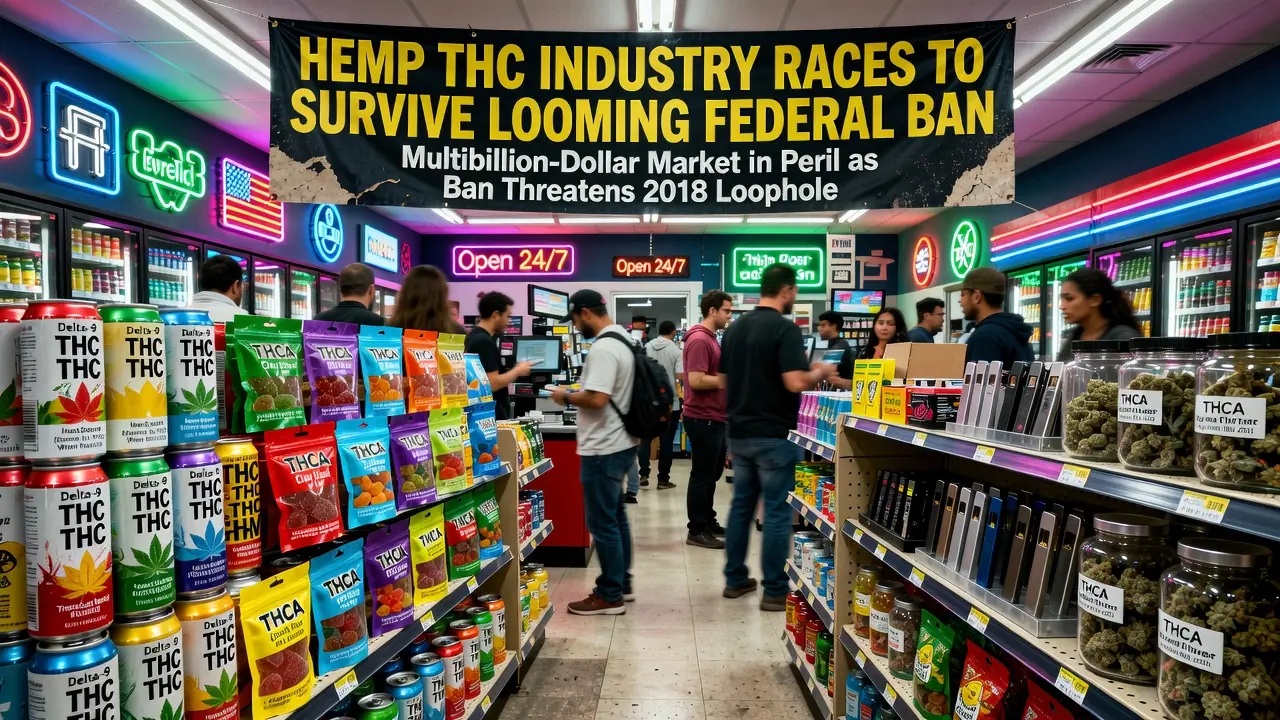
A multibillion-dollar market for intoxicating hemp products - THC seltzers, gummies, vapes and smokable flower sold openly in gas stations, convenience stores and even some big-box retailers - is weeks away from a federal shutdown. Congress has voted to close the legal loophole that let these products flourish outside the regulated marijuana industry, and a short-term government funding bill signed by President Trump pushed the effective date of the ban from Nov. 12 to Dec. 11, buying the industry a narrow window to lobby for regulation instead of elimination.
How a Farm Bill Loophole Became a Billion-Dollar Market
Marijuana and hemp are the same plant, cannabis, distinguished legally by THC content. The 2018 farm bill, championed by Sen. Mitch McConnell to give farmers a new crop, defined hemp as containing less than 0.3% delta-9 THC by dry weight. That threshold was easy to exploit: a beverage or candy could stay under the weight-based limit while still packing enough THC to intoxicate. Manufacturers also leaned on THC-A, a raw cannabinoid that converts to impairing delta-9 when heated, to sell marijuana-like products under the hemp label. The result was an unregulated, largely untested category of goods sold with none of the licensing, testing or age-verification requirements imposed on state-legal cannabis.
Why Lawmakers and Regulators Pushed Back
Dozens of states moved to restrict or ban these products after reports of easy access for minors and inconsistent potency. McConnell closed the original loophole by inserting a hemp THC ban into the measure that ended last year's record government shutdown, setting a 0.4-milligram-per-container THC limit with a one-year delay before enforcement. Public health advocates argue the products pose real risks precisely because they circulated with minimal oversight - no mandated lab testing, no uniform labeling, no consistent age gating. Licensed marijuana operators, who must meet strict compliance, taxation and testing rules, have also pushed for the ban, framing hemp-derived THC as unfair, unregulated competition undercutting markets they built under heavy regulatory burden.
An Industry Betting on Compromise
Businesses built around hemp THC - from small-batch gummy makers in North Carolina to beverage companies in Kentucky and Wisconsin - say the 0.4-milligram cap is so restrictive it would effectively erase the category overnight, taking jobs and tax revenue with it. Industry groups are proposing alternatives: age restrictions limiting sales to adults 21 and older, higher but defined potency caps, and bans on imported synthetic cannabinoids. Some operators say they would accept caps many times higher than what Congress set, provided the products remain legal at all. Alcohol retailers, who have seen cannabis beverages offset declining liquor sales, have also weighed in on the industry's side.
What Happens If the Ban Takes Effect
A full ban would end interstate sales of hemp-derived THC drinks and edibles, though products could potentially survive within individual states that choose to legalize or regulate hemp cannabinoids locally, similar to how state-licensed marijuana markets already operate. For consumers, the episode underscores a broader pattern seen across emerging consumer markets touching intoxicating or habit-forming products: rapid growth in a regulatory gap, followed by a scramble - among businesses, lawmakers and public health advocates - to decide whether the answer is prohibition or structured oversight. Testing standards, potency limits, age verification and clear labeling are the same levers regulators have used in licensed cannabis and gambling markets alike to balance commercial activity against consumer protection.