
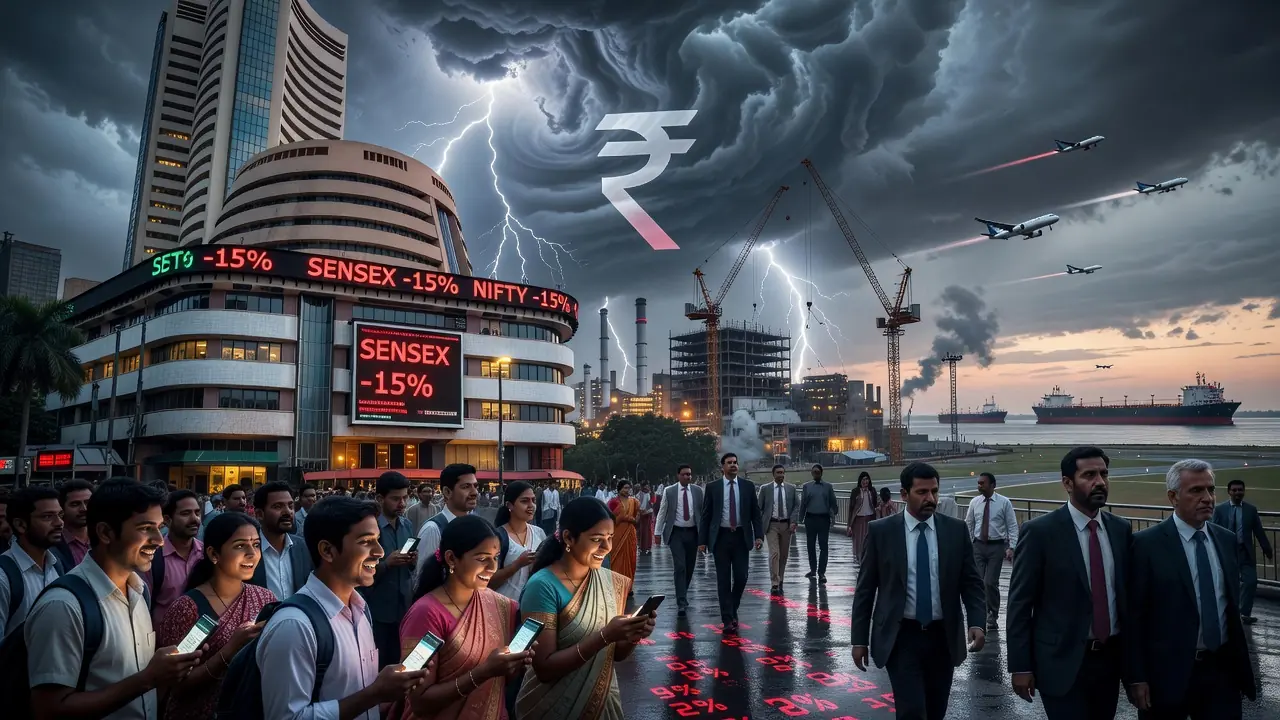
An economy expanding at more than 7% a year would normally be expected to power a thriving stock market. India's does not. The Sensex and Nifty have just ended the longest losing streak in a quarter century, and the disconnect between macroeconomic strength and equity performance has become one of the more striking stories in global finance this year.
A growth story that investors aren't rewarding
India has absorbed a run of shocks - energy disruptions, elevated global interest rates, tariff threats and unpredictable weather - without losing its position as the world's fastest-growing major economy. Yet its benchmark indices have been among the weakest performers of any major market in 2026. Domestic retail investors who put money into the Nifty have watched their holdings lose roughly 15% in value this year, a stark contrast to the strong gains posted by other Asian markets over the same period and over the past two years. The gap between economic output and market return is not new, but it has rarely been this wide or this persistent.
Why foreign capital has pulled back
Foreign institutional investors have been net sellers of Indian equities for an extended stretch, and the cumulative money they have put into the market over the past decade is now close to zero once withdrawals are factored in. Several forces are compounding this retreat. Sustained disruption to oil shipping routes has kept crude prices elevated, squeezing a country that imports the overwhelming majority of its energy needs. Higher global interest rates, particularly in the United States, have made safer fixed-income assets more attractive relative to emerging-market equities. And a weaker rupee has eaten into dollar-denominated returns for overseas investors, even when local-currency performance looks less alarming.
Valuations, earnings and the missing technology layer
Indian equities have become cheaper relative to their own history, narrowing the premium they once held over other emerging markets. But cheaper is not the same as cheap. Relative to earnings, many Indian stocks still trade at levels that look expensive next to markets such as South Korea or Taiwan, where companies have captured real benefits from the global boom in artificial intelligence. India's largest listed companies are, by comparison, concentrated in sectors built around an earlier economic cycle, with less exposure to the technology shifts now driving profit growth elsewhere in Asia. Smaller Indian firms operating in areas like semiconductors, defence and deep-tech are growing, but most remain too small to shift capital allocation decisions at scale.
What keeps the market from falling further
The one force offsetting the foreign exodus has been domestic money. Assets held in Indian mutual funds have grown substantially over the past decade, and the number of individuals investing in stocks and funds has more than tripled. That steady, recurring flow of retail savings has cushioned the market against a sharper decline. It also raises the stakes: households already contending with a soft job market and high living costs are now absorbing losses on the savings they set aside specifically to build a financial cushion. Corporate earnings reports due in the coming weeks will offer the clearest signal yet of how much pressure margins have actually absorbed - and whether retail investors keep adding money if the correction deepens further.